

Key Takeaways
- Memory care is a specialized form of senior living designed around cognitive decline and dementia care.
- Assisted living focuses on daily support, while memory care centers on protecting identity and mental well-being.
- Respite care offers short-term care when caregivers need a break.
- Memory care staff receive in-depth training to support the whole person, not just physical needs.
- Family involvement plays a meaningful role in memory care communities.
A Closer Look at Senior Living Choices
Watching a loved one show signs of cognitive decline is one of the most tender, difficult experiences a family can go through. You want to do what’s right for them, but knowing where to start can feel overwhelming. That’s where understanding the differences between senior living options can bring some much-needed clarity.
Memory care is a distinct type of senior living built specifically for people living with dementia or memory impairment, and it goes well beyond the support offered in standard assisted living. Knowing what sets it apart can help your family choose what truly fits your loved one’s needs. If you’re still weighing your options, exploring the key differences between assisted living and memory care is a helpful place to begin.
The Key Differences Between Senior Living Options
Assisted living provides personalized, day-to-day support for older adults who may need help with things like bathing, dressing, or managing medications. Residents still enjoy a great deal of independence, and the focus is on making daily life more comfortable and manageable.
Memory care goes a step further. It’s tailored specifically for individuals experiencing cognitive decline, memory impairment, or dementia. The environment, staffing, programming, and daily rhythms are all shaped to support mental well-being and preserve a sense of self. It’s not simply assisted living with added supervision. It’s a thoughtfully different approach from the ground up.
Respite care is another option worth knowing about. It’s a short-term care stay that gives family caregivers a chance to rest while their loved one receives attentive, professional support. Whether your family needs a few days or a few weeks, respite care can be a meaningful lifeline for everyone involved.
What Memory Care Is Designed to Do
A Safe and Purposeful Environment
A well-designed memory care community feels calm and home-like, not clinical or cold. Soft lighting, familiar textures, and thoughtfully arranged spaces all work together to reduce confusion and ease anxiety for residents. The layout itself is intentional, allowing residents to move through common areas with a sense of ease and comfort.
These spaces aren’t just functional. They’re designed to feel welcoming, so that a resident can settle into a peaceful daily rhythm without the disorientation that unfamiliar or chaotic environments can bring. You can get a sense of what that atmosphere looks like by browsing community photos.
Person-Centered Support for Cognitive Decline
No two people experience cognitive decline in the same way, which is why memory care relies on individualized care plans. Each plan is built around a resident’s personal history, preferences, and current needs, so care feels familiar rather than generic.
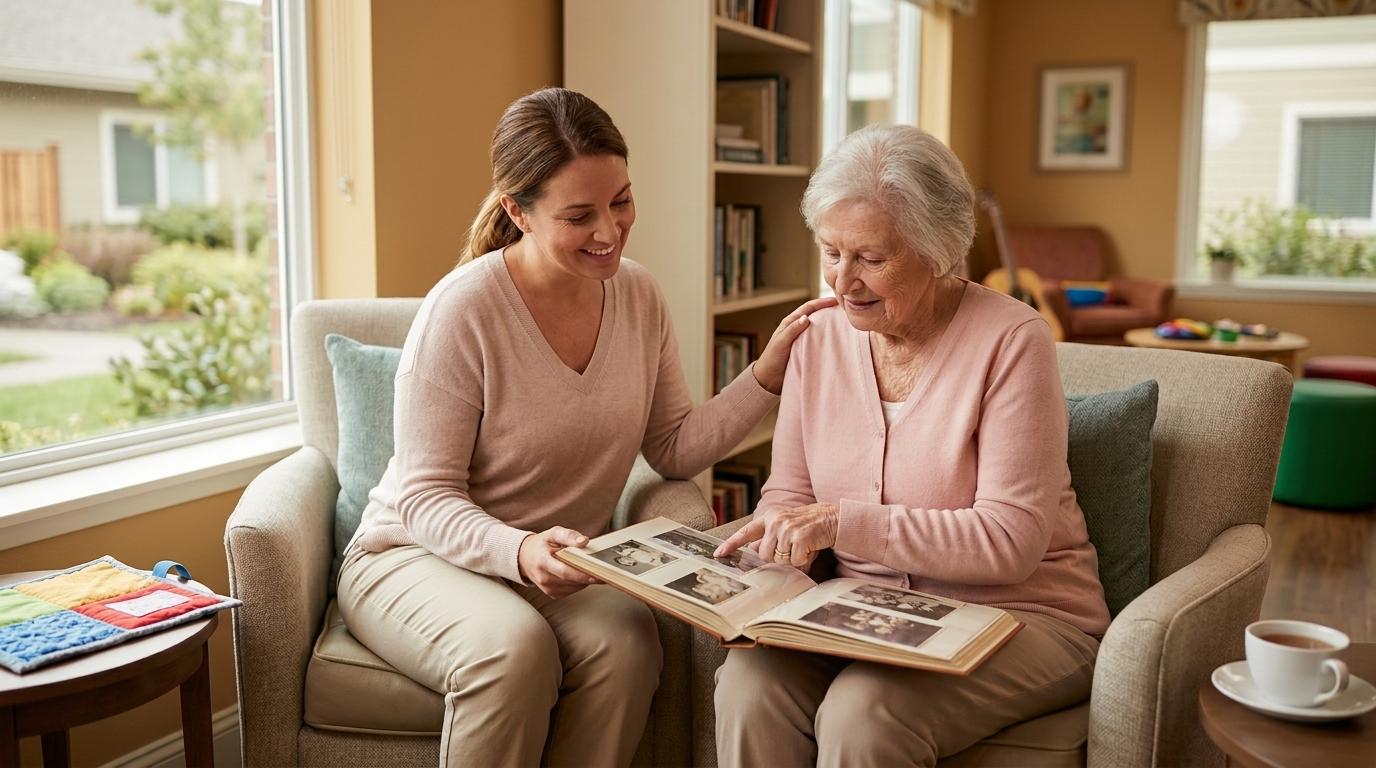
A meaningful part of this approach is the focus on long-term memory. For many people living with dementia, long-term memories remain more intact than recent ones. Memory care programs use activities, music, storytelling, and familiar experiences to gently stimulate those deeper connections, helping residents stay in touch with who they are.
How Memory Care Staff Approach Daily Life Differently
Staff in a memory care community receive comprehensive training that goes well beyond standard senior care. They learn to recognize the emotional and behavioral cues that residents may not be able to express in words, and they respond with patience, warmth, and skill.
More than that, they take the time to learn each resident’s story. A person’s background, passions, and personality aren’t just background details. They become tools for connection. A staff member who knows a resident once loved gardening can use that shared knowledge to spark a moment of joy or calm during a difficult day.
Emotional and spiritual well-being receive the same attention as physical health. This whole-person approach is at the heart of The Peregrine Way, which shapes the day-to-day experience in memory care.
The Role of Family in Memory Care
Stay Close and Connected
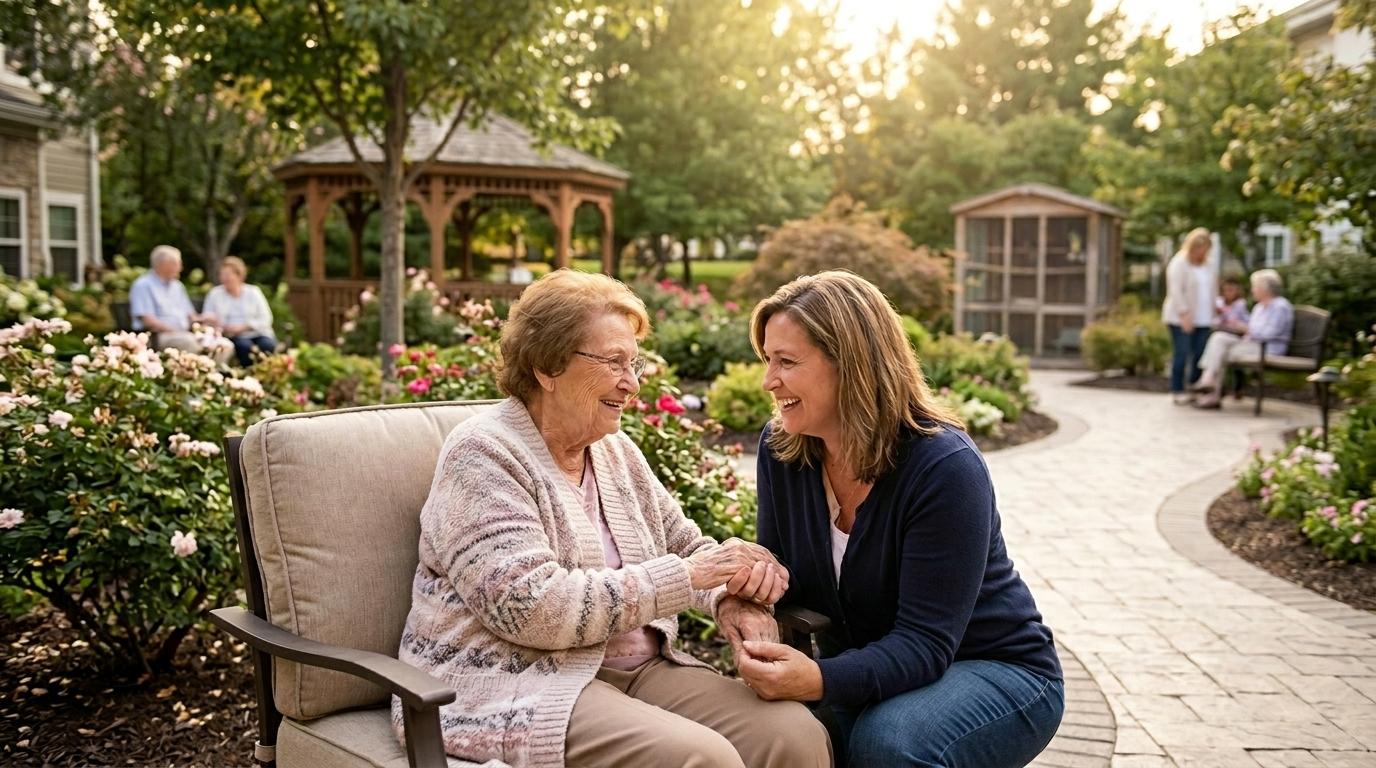
Family relationships remain deeply meaningful throughout a loved one’s time in memory care. Many communities welcome family members to join their loved one for meals, events, and spiritual services at no extra cost. You can pull up a chair beside them in a cozy dining room and simply share time together.
Welcoming, thoughtfully designed common spaces make it easy for families to visit comfortably, whether that’s a shared meal, a gentle walk through a private garden, or simply sitting together in a quiet space.
Support for Caregivers
Caring for a loved one with dementia is emotionally demanding, and families deserve support too. Recognizing the signs of caregiver stress is an important first step, and many memory care communities offer support groups and caregiver resources to help family members navigate this journey with guidance and connection.
Community events that bring families and residents together also create moments of joy that everyone can look forward to.
How to Know When Memory Care Is the Right Step
Signs that a loved one may need memory care include repeated disorientation, difficulty with daily tasks that goes beyond physical limitations, wandering, or significant changes in behavior or personality. If assisted living no longer feels like enough, it may be time to explore memory care.
When touring a memory care community, ask about staff training, daily programming, how care plans are personalized, and how families stay involved. Starting the conversation at home with honesty and compassion, focusing on your loved one’s comfort and safety, can make the transition feel less daunting for everyone.
At Peregrine Senior Living at Shaker, memory care is built around each resident’s individuality, long-term memories, and emotional well-being. If you’d like to see what that looks like in person, reach out to schedule a tour today.








No more posts